Iphone Simulator Macos
I’m sure plenty of folks know this, but like literally anything else in the world, plenty of folks don’t. This is an incredibly handy feature of developing responsive sites and testing them on as real of devices as you can. Plus, it doesn’t cost anything additional beyond your macOS computer.
Download iphone simulator for free. Developer Tools downloads - Apple iPhone SDK by and many more programs are available for instant and free download. Pre-start the iOS simulator before building your application to make sure that the simulator is booted in time. Doing so generally reduces the number of simulator timeouts observed in builds. To pre-start the simulator, add the following to your config.yml file, assuming that you are running your tests on an iPhone 11 Pro simulator with iOS 13.2. 50% Scale ⌘ 1 command + 1 100% Scale ⌘ 2 command + 2 200% Scale ⌘ 3 command + 3. Simulator scale options from Xcode Menu: Xcode 9.1+: Menubar Window 'Here, options available change simulator scale' ( Physical Size & Pixel Accurate) Pixel Accurate: Resizes your simulator to actual (Physical) device's pixels, if your mac system display. However, before buying the Ryzen, I'd like to know if XCode works, if the iOS simulator works, and if I can pass the USB from an iPhone to inside the VM and use in the xcode. Have anyone did that? I couldn't find youtube videos about xcode on KVM, just people doing macOS on KVM. I left some comments but no one replied. Jun 15, 2020 IPhone emulators are programs that replicate the hardware of an iPhone so that you can run iOS apps on other operating systems. App developers often use emulators to test iPhone software on Windows or Mac computers they use for programming. IPhone Simulator comes with quality graphics that look very realistic.
Step 1) Download Xcode
The iOS Simulator is an app that comes bundled with Xcode. Xcode is free and you get it from the app store.
Step 2) Open Simulator
It’s in the main Xcode menu at Open Developer Tool > Simulator.
It will be a new icon in your dock. I like to move it so that it stays an icon in my dock, and I don’t need to open Xcode again to find it and use it.
(^ It’s on the far right here.)
The window for the simulator is like a fake Apple device. You can simulate just about anything (Watch, AppleTV, iPad, etc) by going to Hardware > Device.
Step 3) Open Safari and go to a website
Easy enough to type something in. It understands keyboard input so you don’t have to like use the mouse to click fake on-screen keys.
Important trick! Often times you are pasting a URL into the address field. To do this, you’ll need to have the URL on your clipboard, activate the simulator, press ⌘-V to paste, then you can click to bring up the iOS paste menu and paste it. At least… that’s what you used to have to do. I just recently upgraded to Xcode 10 and it seems like you can simply ⌘-V right into the URL bar now, so perhaps the weird work-around is fixed.
Step 4) Open Desktop Safari & Web Inspector
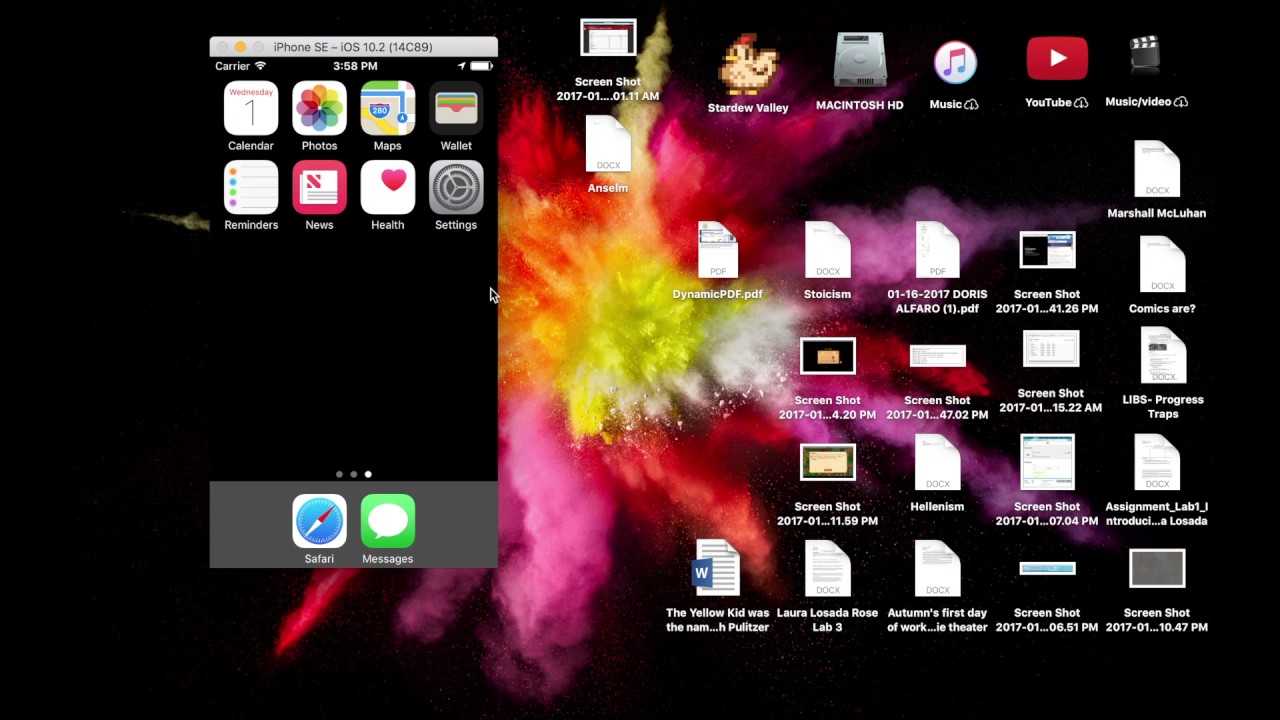
You’ll need to go to Settings > Advanced and check the Show Debug Menu option. Then you’ll see the option to open the web inspector for the Simulator right from that menu.
With the Web Inspector open, you can debug inside the Simulator just like you could right in a desktop browser with DevTools. Windows 7 service pack 1 kb976932 download.
Actual Devices
Apple Iphone Simulator
Simulators are pretty great because they are easy and just a few clicks away. But if for whatever reason you want to test on a real device, you also can do that. As long as:
- The device is connected to your computer (lightning to USB), and it’s “trusted”.
- You have an “inspectable” application open, like Safari.
It should show up in the same Debug menu in Safari and let you inspect the browser right on the real device. It’s a bit surreal to watch the blue-boxes of Web Inspector showing up on your real device!
Iphone Emulator For Mac
Looking for some useful browser extensions as well? Click here.
Question or issue on macOS:
iPhone Apps built for the simulator are stored here:
Is it possible to copy the
This would be very useful for testing/demoing with out having to buy iPhones for all the managers and external clients.
How to solve this problem?
Solution no. 1:
Yes, if you send those files to another person, and they put them into that directory, they can test the applications in the iPhone Simulator as well 🙂
Solution no. 2:
I found a way that requires just a little more setup, but is much easier for non-developers:
Instructions for your users/testers:
- Install Xcode following Apple’s instructions
- Double-click the attached application – the iPhone simulator will launch, install the app and start it automatically.
How to set it up:
- Download and unzip (to a folder on your desktop or wherever) ‘Simulator Bundler’ from: http://github.com/landonf/simlaunch/downloads
- Set your XCode build target to the required Simulator configuration (iPad/iPhone/which iOS version)
- Do a ‘Build and archive’
- Find it: select ‘Archived applications’ in the Organizer, right click the relevant build, select “Reveal archived application in Finder”
- Drag the application (yourAppName, no extension) onto the Simulator Bundler app
Done. This will create a self-contained Mac OS X yourAppDisplayName.app file in the same folder (with your app’s icon as the icon) that you can stick up on an FTP server or email to your users/testers.
Mac Os X Simulator
—
I think it’s much neater/slicker than having to explain where to copy files, how to launch the simulator and so on. And if anything gets messed up they can just uninstall via the familiar tap-and-hold + (x) gesture in the simulator UI, then double-click the app you sent them again.
You can also produce several of these packages changing the bundle identifier between builds, allowing them to be installed side by side in your testers’ simulators; say for getting some user feedback on different UI designs, or configure one for Production and one for Staging/QA servers, so your content editors can check their changes before they go live or whatever.
The ability to reinstall the app from a desktop icon is also very convenient for localisation testing: launch the simulator, uninstall the app if present, set the required region format and language, double click the icon on your desktop, test; repeat for each required locale. Overwatch free activation code. (guarantees a fresh install each time, I’ve found that switching language with the app installed can result in all sorts of strange behaviour)