Download System Preferences For Mac Os X
- Open System Preferences On Mac
- Download System Preferences For Mac Os X Download
- System Settings Mac Os
High Sierra is an update of MacOS which focuses mostly on back-end developments and a higher level of user security. As such, this operating system lays a foundation for future upgrades.
- OnyX is a multifunction utility that you can use to verify the structure of the system files, to run miscellaneous maintenance and cleaning tasks, to configure parameters in the Finder, Dock, Safari, and some Apple applications, to delete caches, to remove certain problematic folders and files, to rebuild various databases and indexes, and more.
- Mac OS X 10.9.3 and above. Install Instructions. To install this update. Office 365 Commercial customers can get the new Outlook for Mac by accessing their Office 365 Portal, (Gear icon Office 365 Settings Software Outlook for Mac icon) or visiting the Software page. Office 365 consumer subscribers can get the new Outlook for Mac by going.

Straightforward app that integrates itself into the OS X status bar to give you quick access and control over your Mac's energy saver settings Hidden Bar Hide menu bar items and avoid clutter without removing the icons altogether, using this impressively straightforward and lightweight app. Firefox support has ended for Mac OS X 10.6, 10.7 and 10.8 Firefox Mac OS X 10.9, 10.10 and 10.11 users move to Extended Support Release Note: Firefox version 83 and higher support both Intel-based Macs (x86 architecture) and Apple devices with the new ARM-based CPU ( Apple Silicon ).
Global Nav Open Menu Global Nav Close Menu; Apple; Shopping Bag +.
Visage 2.2.2 is a highly efficient, high-quality System Preferences pane that allows you to easily and safely customize the appearance of Mac OS X. Run screen savers as your desktop background, customize your login screen, personalize system alerts. Therefore if users have access to the internet it is recommended to download the OS X 10.5.6 'combo' updater and extract the 'System Preferences.app' file from it, which will ensure the latest. System preferences would not respond and ram (real memory) shrunk in a hurry. I started with about 6G free and at last look, I am down to 1.7G. It is the SystemUIServer (1.86G) and the loginwindow(1.84G) along with system preferences(272M) that are grabbing up the ram. 2.1 How to get R.app. R.APP is part of the binary distribution of R for Mac OS X available from CRAN.That distribution consists of one package containing the R framework and R.APP. Development versions of R.APP are made available on daily basis in the form of a disk image containing the R.APP itself. See the Mac OS X pages on CRAN for detail how to obtain such snapshots (currently at http.
Stay safe
In essence, High Sierra took what was good with Sierra and developed it into a more comprehensive software.
High Sierra emphasizes the already-existing benefits of MacOS previous system, Sierra. There are few bells and whistles, but the changes are noticeable and positive. The Apple file system is the most significant feature it brought. It enables the storage and encryption of a large number of files. Download pro tools mac os x. Thus, it boosts performance and helps manage device memory issues.
Apple also introduced new formats for video and photos in this version. These formats compress data - that’s a benefit as files can get huge with ever-rising resolutions. They added support for virtual reality headsets as well.
Besides that, when it comes to Safari, Mac search engine, there are some notable improvements with the update. The users can now control annoying auto-play videos, prevent tracking, and more. There are also notification controls, and you will experience a boost in performance, too.
The most noticeable changes took place in Apple’s Photo App, though. It went through a total revamp both visually in its interface and terms of tools and functions available. Many other discreet changes happened all over the system.
Where can you run this program?
Remove os download from computer mac. If you’re running Sierra on your Mac, you will be able to run this one as well.
Is there a better alternative?
Yes. Mojave, the newest version of MacOS, brought even more improved features to the table. However, if you can’t run it on your device, this is the second best.
Our take

High Sierra is not the shiniest upgrade Apple brought, but it’s one that sets the stage for new upgrades to come. Even out of that context, it’s a great operating system.
Mac Os Download Status System Preferences Download
Should you download it?
Mac Os X System Preferences
Yes, if your device can support it. The new options and better security settings are worth getting.
10.13
The latest version of OS X features an elegant design, includes enhancements to the apps you use most, and enables your Mac and iOS devices to work together in new ways. Learn more about OS X; Safari extensions are a great way for you to add new features to Safari. Built by developers, Safari extensions use the latest web technologies. Everyone likes to use Mac OS X Lion in a particular way. Finding out how to tweak various options will get Mac OS X Lion to work just the way you like it. You should start by becoming familiar with System Preferences, which appear on the Apple menu and in the Dock. The following steps. System Preferences in OS X Yosemite; System Preferences in OS X Yosemite. Mac” LeVitus is among the world’s leading authorities on the iPad, iPhone, and OS X. He’s been one of the Mac community’s most trusted gurus for more than 25 years and has written. Os x free download - Apple iOS 13, R for Mac OS X, Apple Mac OS X Mavericks, and many more programs.
| Operating system | macOS |
|---|---|
| Type | Control panel |
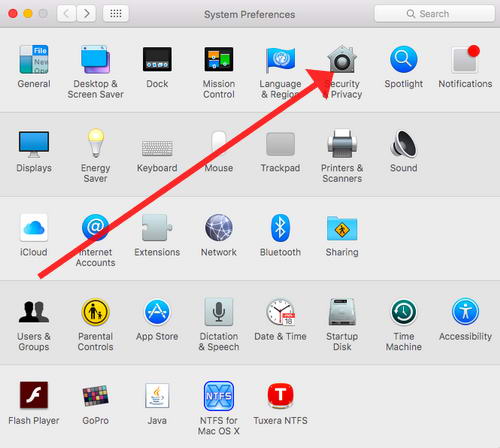
System Preferences is an application included with the macOS operating system that allows users to modify various system settings which are divided into separate Preference Panes. The System Preferences application was introduced in the first version of Mac OS X to replace the control panel that was included in the classic Mac OS. Prior to Mac OS X, a control panel is a small application which enabled the user to modify software and hardware settings such as the sound volume and desktop pattern. Control panels differ from extensions in that they allow the user to specify options, whereas extensions provide the user with no interface for setting preferences. In many software distributions Extensions provided the functionality and the corresponding Control Panel provided all the configuration options.
Overview[edit]
History[edit]
System Preferences Download Mac Os X 10.13
Before the release of Mac OS X in 2001, users modified system settings using control panels. Control panels, like the preference panes found in System Preferences, were separate resources (cdevs) that were accessed through the Apple menu's Control Panel.
A rudimentary form of system preferences dates back to 1983 with the Apple Lisa Preferences menu item. This included a subset of configurable settings called 'convenience settings' as well as other settings that adapted according to the programs and devices installed on the Lisa Office System. The original control panels in the earliest versions of the classic Mac OS were all combined into one small Desk Accessory. Susan Kare designed the interface for the original control panel, and tried to make it as user-friendly as possible. This design was used until System 3 when separate control panel files ('cdev's) were added, accessible solely through the control panel.
With the debut of System 7 the control panels were separated into individual small application-like processes accessible from the Finder, and by a sub-menu in the Apple menu provided by Apple Menu Options. Mac OS 9, the last release of the Mac OS before Mac OS X, included 32 control panels. By Mac OS 9, many control panels had been rewritten as true applications.
Organization[edit]
System Preferences Download Mac Os X High Sierra
When Mac OS X was released, preference panes replaced control panels. Preference panes are not applications but loadable bundles for the System Preferences application, similar to the arrangement used under System 6. By default, System Preferences organizes preference panes into several categories. In the latest version of System Preferences, included with Mac OS X v10.7, these categories are 'Personal', 'Hardware', 'Internet & Wireless', and 'System'. A fifth category, 'Other', appears when third-party preference panes are installed. Users can also choose to sort preference panes alphabetically. System Preferences originally included a customizable toolbar into which frequently-used preference pane icons could be dragged, but this was removed in Mac OS X v10.4 and replaced with a static toolbar that featured back and forward navigation buttons and a search field.
Apple has added new preference panes when major features are added to the operating system and occasionally merges multiple panes into one. When Exposé was introduced with Mac OS X v10.3, a corresponding preference pane was added to System Preferences. This was replaced by a single 'Dashboard & Exposé' pane in Mac OS X v10.4, which introduced Dashboard. When the .Mac service was replaced by MobileMe, the corresponding preference pane was also renamed.
Functionality[edit]
Mac OS 9[edit]
The control panels included with Mac OS 9 are:[1][2]
- Appearance
- Apple Menu Options
- Date & Time
- DialAssist
- Energy Saver
- File Exchange
- File Sharing
- File Synchronization
- General Controls
- Internet
- Keyboard
- Keychain Access
- Launcher
- Location Manager
- Memory
- Modem
- Monitors
- Mouse
- Multiple Users
- Numbers
- QuickTime Settings
- Remote Access
- Sound
- Speech
- Startup Disk
- TCP/IP
- Text
- Web Sharing
OS X Mountain Lion[edit]
OS X Mountain Lion (10.8) includes the following preference panes:[3]
| Option | Description |
|---|---|
| Users & Groups | control user creation/deletion, administrator privileges and user limitations. |
| General | changes the general color scheme of the OS (Aqua or Graphite), as well as placement of scroll arrows and font smoothing. |
| Bluetooth | pair Bluetooth devices and edit Bluetooth settings. |
| CDs & DVDs | used to set default settings upon inserting blank CD/DVDs, as well as music CDs, picture CDs and video DVDs. |
| Date & Time | used to set the date and time of the computer, as well as how the clock appears on the menu bar. |
| Desktop & Screensaver | used to set the desktop picture as well as the screensaver, and their settings. |
| Displays | used to set screen resolution and color settings. |
| Dock | adjust the dock size as well as magnification and position on screen. |
| Energy Saver | optimize energy settings as well as set sleep times and processor usage. |
| Mission Control | changes the preferences for the Mission Control application, such as showing the Dashboard as its own space or automatically rearranging spaces based on most recent use. Also sets Active Screen Corners and keyboard and mouse settings to activate certain applications such as Launchpad or to show the Desktop. |
| iCloud | configure iCloud, Apple's cloud storage and cloud computing service. This pane was added in version 10.7.2 along with the release of iOS 5. |
| Ink | set handwriting recognition settings (only appears when a graphics tablet is connected). |
| Language & Text | set the default OS language as well as numerical, measurement, currency, date, and time formats. |
| Keyboard | set keyboard settings |
| Mouse | set mouse preferences. If using a Magic Mouse, provides preferences for the multitouch gestures like double-tapping with two fingers and swiping between pages. |
| Network | set Ethernet, AirPort, Modem and VPN Settings. |
| Notifications | configures settings for notifications, such as the manner they're presented in (banner, alert, etc.) and which applications can display notifications and which ones can't. |
| Parental Controls | manage parental controls for accounts, and view account usage data. |
| Print & Scan | set the default printer as well as scanner settings. |
| Profiles | only appears if the computer is enrolled in a device management solution |
| Security & Privacy | set 'FileVault' and account security settings, and set up the firewall. |
| Sharing | set the computer name, and sharing and remote management services. |
| Software Update | set default times to check for updates, and view updates already installed. |
| Sound | set alert sound, volume and input/output options. |
| Dictation & Speech | set the computer's default voice, set up speech recognition, configure settings for the dictation feature, and other speech settings. |
| Spotlight | set the preferences for the Spotlight system-wide search application |
| Startup Disk | set the default disk, for the computer to boot into. |
| Time Machine | set the Time Machine drive and backup options. |
| Trackpad | adjust tracking, clicking, and scrolling speed. Also allows users to adjust multi-touch gestures on newer MacBooks |
| Accessibility | make the system more accessible for those with sight, hearing and other impairments. |
System Preferences Download Mac Os X Pro
In OS X Mountain Lion, the 'Universal Access' pane is changed to 'Accessibility' and 'Speech' is changed to 'Dictation & Speech'. Synergy 1.8.8 mac download.
Open System Preferences On Mac
See also[edit]
Open System Preferences On Mac
References[edit]
- ^'Mac OS X 10.0: Using Mac OS 9 Control Panels in Classic Environment'. support.apple.com. Retrieved January 6, 2015.
- ^'GUIdebook > Screenshots > Settings menu'. www.guidebookgallery.org. Retrieved January 6, 2015.
- ^'Mac OS X 10.6: System preferences'. support.apple.com. Retrieved January 6, 2015.
External links[edit]
- Mac Basics: Set your preferences, Apple Support